

Adding AI to an app is easy. Building an AI feature that users rely on every day is much harder. Many founders launch chatbots or recommendation tools only to watch engagement collapse after the first try. The reason is simple: novelty fades, but usefulness stays. To make AI features last, you must design them as part of the product’s core value, not as decoration.
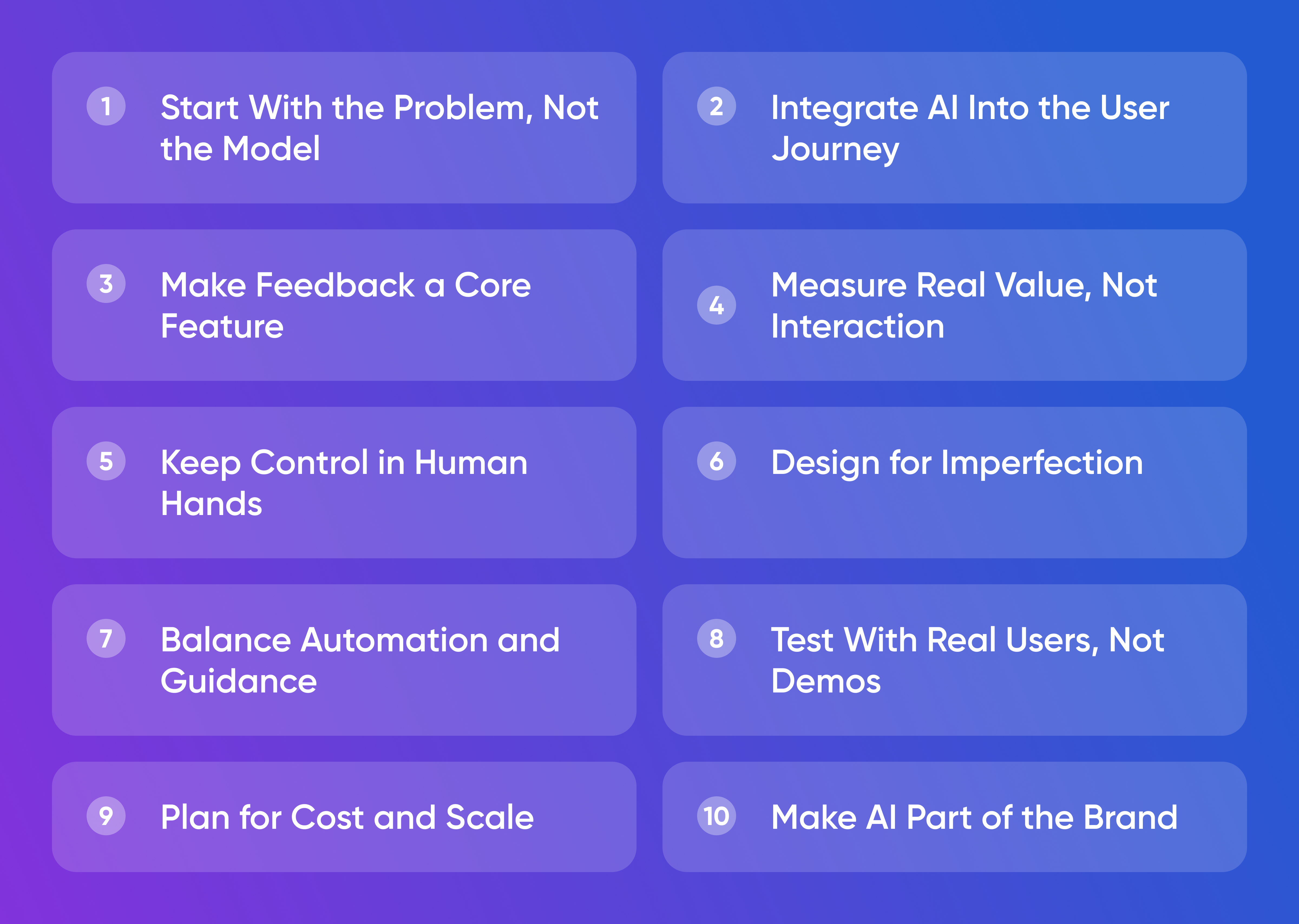
Start With the Problem,
Not the Model
The first step in building any AI feature is defining the problem in user terms. If you cannot describe the problem without mentioning AI, it is not a real problem yet. For example, users do not want “an AI for writing emails.” They want “a faster way to respond to messages without sounding robotic.” Framing the task this way shapes everything from data collection to UX.
Once you know the job the feature must perform, evaluate whether AI is the best solution. Many founders overuse machine learning when a rule-based system would do. AI should only exist when the problem involves uncertainty, variation, or large-scale pattern recognition that traditional logic cannot handle.
Integrate AI Into the User Journey
AI should feel like a natural extension of the product. Place it where the user already acts, not in a separate menu or tab. The experience must start with intent, not curiosity. For instance, a writing assistant works best inside the text field, not behind a button that says “Generate with AI.” Seamless integration increases trust and reduces drop-off.
The flow should also show what AI can and cannot do. Transparency builds confidence. Users prefer systems that state limits clearly. A short line like “AI drafts the text, you approve it” gives control back to the user while setting the right expectation.
Make Feedback a Core Feature
AI products improve through feedback loops. Let users rate outputs, edit results, or mark them as wrong. Every correction is a training signal. Collecting this data ethically and transparently turns usage into learning. Even simple thumbs-up and thumbs-down ratings can guide model adjustments.
The interface should make feedback effortless. Do not hide it behind menus. Small icons or inline options work better. Treat feedback as part of the experience, not as afterthought.
Measure Real Value, Not Interaction
Engagement metrics can be deceptive. The number of generated responses or queries does not equal satisfaction. Measure time saved, completion rates, and repeat use instead. The best signal of long-term success is whether users continue relying on the feature without reminders.
For example, if an AI scheduling assistant reduces average meeting setup time from five minutes to thirty seconds, that is measurable value. Metrics should track efficiency, accuracy, and frequency of use rather than raw activity.
Keep Control in Human Hands
AI must assist, not replace. Users should always feel in charge. Give them clear ways to edit, reverse, or approve AI suggestions. When people sense loss of control, they stop trusting the system. Features that support agency—such as editable text boxes or confirmation prompts—help maintain confidence and satisfaction.
Transparency about data use also strengthens trust. Always show when AI is active and what data it accesses. Provide simple language, not legal jargon. A feature that feels safe will scale faster because users share it more freely.
Design for Imperfection
AI will make mistakes. Plan for it. Build recovery paths that turn errors into teachable moments rather than frustration. A polite message like “That result may be off. Want to try again?” reduces blame on the system and encourages retry. Error tolerance keeps users experimenting instead of quitting.
Show variety in results when appropriate. Offering multiple options allows users to choose the best fit and understand the model’s range. Diversity of output hides imperfections and increases perceived intelligence.
Balance Automation and Guidance
The most loved AI tools combine automation with clear guidance. Too much automation creates fear of loss of control. Too little leaves users doing all the work. Strike a balance by automating repetitive steps while letting users make final decisions.
A photo editing app might automatically enhance colors but still allow manual tweaks. A recruiting app could suggest candidate matches yet leave final selection to the hiring manager. This shared control creates trust and satisfaction.
Test With Real Users, Not Demos
AI demos often impress because they are staged with perfect data. Real users break those illusions fast. Run tests with live inputs. Observe where users hesitate, correct, or misunderstand results. Their reactions will reveal whether the feature fits real workflows.
Keep testing cycles short. Each round should answer one question: Did AI help the user reach value faster? If not, adjust prompts, tone, or placement. The faster you iterate, the more natural the feature will feel.
Plan for Cost and Scale
AI services can become expensive as usage grows. Track token consumption, API calls, and latency from the beginning. Estimate cost per user action and identify break-even points. You might later fine-tune smaller models locally to reduce expenses. Scalability requires both technical and financial foresight.
Latency matters too. Even a one-second delay can reduce trust. Use caching, batching, or precomputation where possible. A fast response feels intelligent, while a slow one feels broken, regardless of accuracy.
Make AI Part of the Brand
When done well, an AI feature defines the identity of your product. Grammarly became synonymous with writing quality, not just AI grammar checks. Spotify’s recommendations represent taste, not algorithms. The AI works quietly behind the scenes but shapes user perception.
To reach that level, your brand voice and AI behavior must align. The tone of messages, explanations, and suggestions should match your company’s character. Consistency turns function into personality and makes the feature memorable.
Conclusion
AI features succeed when they solve a real problem, feel natural to use, and respect human control. Begin with a user need, integrate AI into the flow, gather feedback continuously, and measure value through outcomes, not hype. When users trust your AI and keep returning to it, you have achieved the rare combination of innovation and utility that turns technology into habit.


