

A clear product roadmap keeps a startup focused when everything around it changes. Without one, teams chase ideas, investors lose clarity, and customers sense inconsistency. A roadmap is not a promise; it is a statement of intent. It aligns goals, guides priorities, and ensures every release serves a measurable outcome.
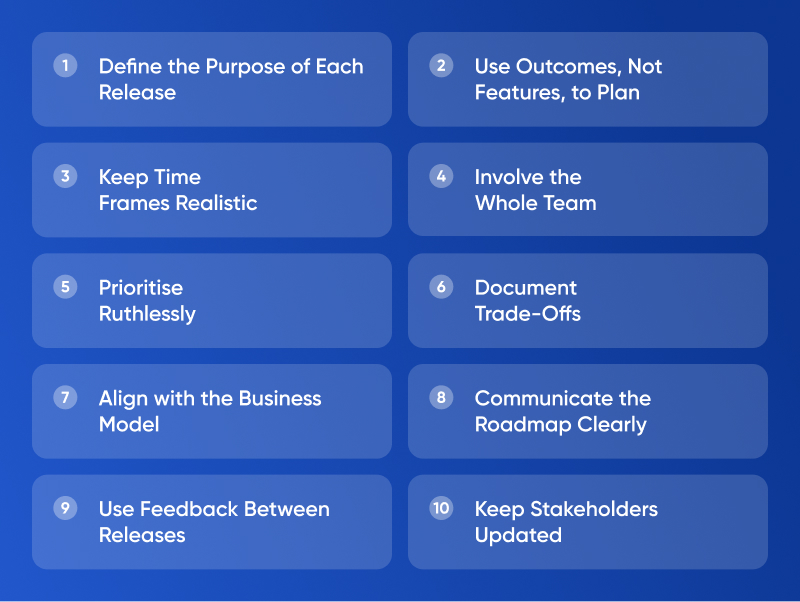
Define the Purpose of
Each Release
Every release should have one purpose. That purpose may be validation, retention, or expansion. A validation release tests whether users truly need a feature. A retention release fixes friction and improves experience. An expansion release introduces something new that increases reach or revenue.
Before scheduling tasks, decide what each of your next three releases should achieve. Write those goals in one sentence each. For example: “Release 1 improves onboarding completion,” “Release 2 introduces sharing,” “Release 3 prepares for premium plans.” These short statements anchor your strategy and help teams choose what to build and what to delay.
Use Outcomes, Not Features, to Plan
Traditional roadmaps list features. Modern roadmaps focus on outcomes. A feature says what you will ship. An outcome says why it matters. Reframing “Add referral program” into “Increase organic installs by 20 percent” changes how teams think. It encourages experimentation rather than blind delivery.
Every item on your roadmap should connect to a metric. Examples include activation rate, weekly retention, or monthly revenue. When releases tie to measurable outcomes, progress becomes visible and decisions become objective.
Keep Time Frames Realistic
Three releases are enough to give direction without creating illusions of certainty. The first release should have detailed scope. The second can be defined by problem area, not specific features. The third should remain flexible. Conditions, competitors, and user feedback will change before you reach it.
Plan releases around three-month cycles if possible. Shorter cycles risk chaos. Longer cycles lose agility. Three months allow for development, testing, and learning without overplanning.
Involve the Whole Team
A roadmap works only when everyone contributes. Designers, engineers, marketers, and support staff each hold different insights about user pain. Gather their input early through short workshops or asynchronous surveys.
Leadership defines vision, but collaboration refines reality. When the team helps shape the roadmap, commitment grows naturally. People execute plans they helped create with more ownership and less resistance.
Prioritise Ruthlessly
Not every idea deserves space on the roadmap. Use a simple scoring method to compare impact versus effort. High-impact, low-effort tasks move first. Medium-impact items stay in backlog until a gap appears. High-effort, low-impact features should be questioned or cut.
Avoid prioritising by emotion or volume of requests. Ten loud users do not outweigh a hundred silent ones whose behaviour data points elsewhere. Trust analytics, not noise.
Document Trade-Offs
A good roadmap includes what you will not do. Listing excluded ideas prevents future confusion and protects focus. Document trade-offs clearly: “We will delay Android release to improve iOS retention first.” Transparent trade-offs strengthen team trust and investor confidence.
When priorities shift—and they will—update the rationale. The roadmap should evolve with evidence, not impulse.
Align with the Business Model
Each release should move the company closer to financial sustainability. Early-stage startups often separate product goals from business goals, creating friction. If your strategy depends on recurring revenue, design features that support engagement and renewals. If it depends on scale, build network effects and automation.
Map features to revenue paths. Ask whether each release increases conversion, retention, or reach. Features that fail to connect to at least one of these levers belong in a later phase.
Communicate the Roadmap Clearly
Presentation matters. Use a visual format that anyone can read in one glance. A simple table or timeline is enough. Avoid overcomplicated diagrams. Every stakeholder—team, investor, or partner—should be able to see what happens next and why.
Write short explanations beside each release that focus on benefits, not tasks. “Improves load time for better retention” communicates more value than “Database migration.” People outside the technical team care about impact, not implementation.
Use Feedback Between Releases
Each release should teach you something new. After launch, gather user data and team feedback. Compare actual outcomes with targets. Did activation improve? Did retention grow? Adjust the next release based on these results. This rhythm turns the roadmap into a learning cycle rather than a static plan.
If users respond differently than expected, accept the signal quickly. Do not cling to features that fail to move metrics. Flexibility separates startups that learn fast from those that stagnate.
Keep Stakeholders Updated
Investors and partners appreciate visibility. Share a quarterly roadmap summary with highlights, metrics, and planned next steps. Be honest about what worked and what did not. Transparency creates credibility even when goals shift.
Within the team, hold short roadmap reviews every month. These sessions maintain alignment and surface dependencies early. When everyone understands timing and priorities, coordination improves naturally.
Conclusion
A roadmap is more than a schedule. It is a communication tool that connects vision, metrics, and daily work. Define clear outcomes for each release, involve your team, document trade-offs, and adapt through evidence. When executed with discipline, a roadmap transforms chaos into clarity and momentum into measurable progress.


